Joint work with Alonso Alfaro-Ureña. Forthcoming at the American Economic Journal: Microeconomics.
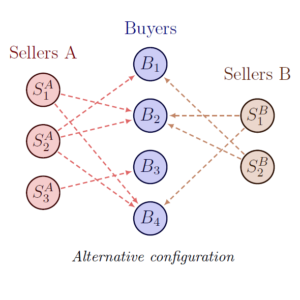 Abstract. We build a model of production network formation that enables econometric estimation of the determinants of supplier choice, like trade costs or matching frictions. The model informs an estimator obtained from a transformation of the multinomial logit likelihood function that conditions on two network statistics: the out-degree of sellers (a sufficient statistic for the seller marginal costs) and the in-degree of buyers (which is determined by decisions of buyers, like “make-or-buy”). In an empirical application, this estimator shows that a prominent Costa Rican highway fostered firm-to-firm connections between core and peripheral regions, and within the core regions themselves.
 Abstract. We study the effects of acquisitions on firms and their production networks in Türkiye using rich administrative firm-to-firm transaction data. Leveraging a staggered event-study design, we compare post-acquisition outcomes of target firms and their trading partners to matched controls. Acquisitions increase the intangible intensity of target firms but have no consistent effects on conventional performance measures. A key finding is that the network consequences of acquisitions depend on the acquirer’s origin. Domestic acquisitions lead to tangible capital deepening and strengthen existing buyer-supplier relationships along the intensive margin, while foreign acquisitions tend to shift production toward outsourcing and diversify network connections. We argue that these differences stem from variation in firms’ relationship capability: their ability to sustain productive links in a network governed by incomplete contracts.